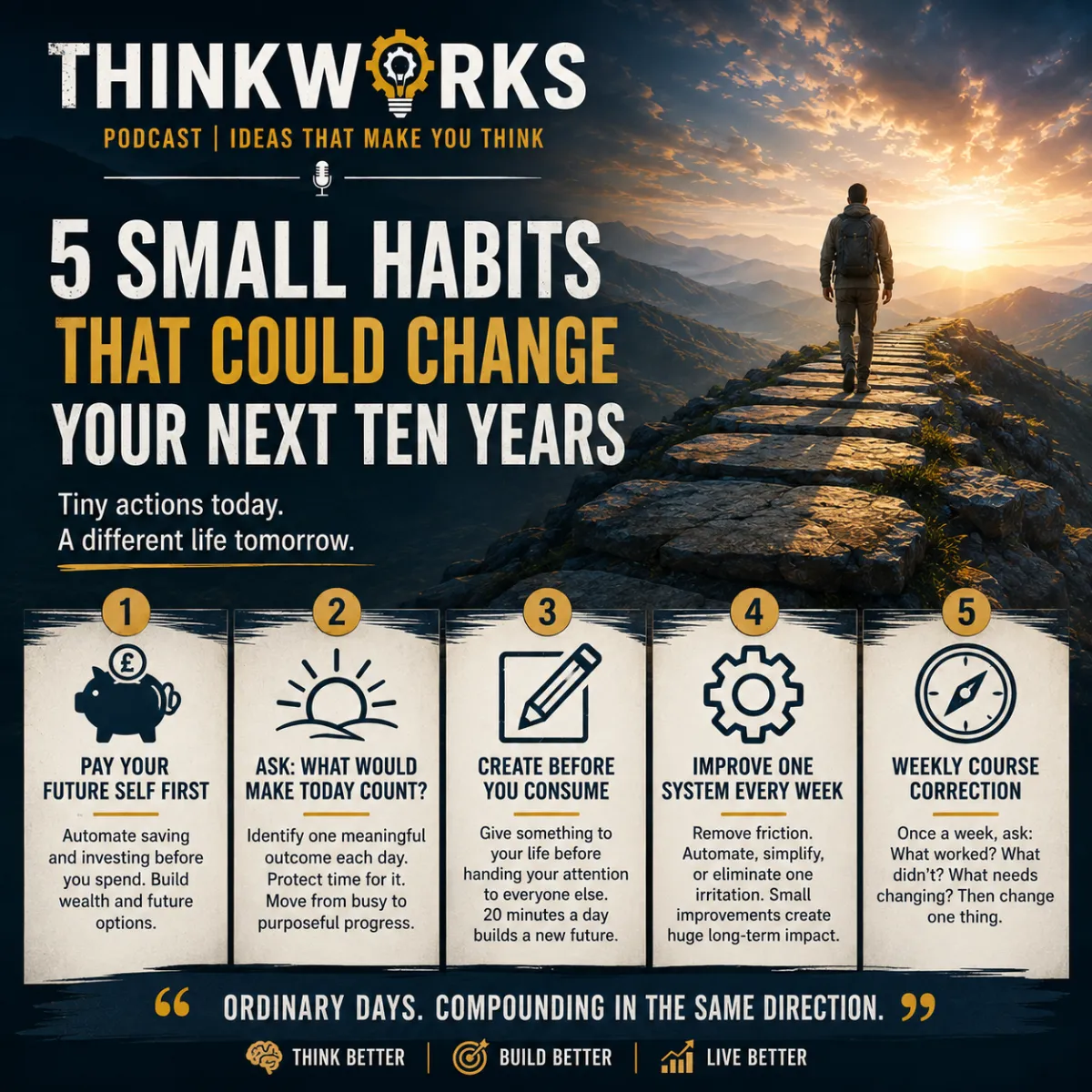
Five Small Habits That Could Change Your Next Ten Years
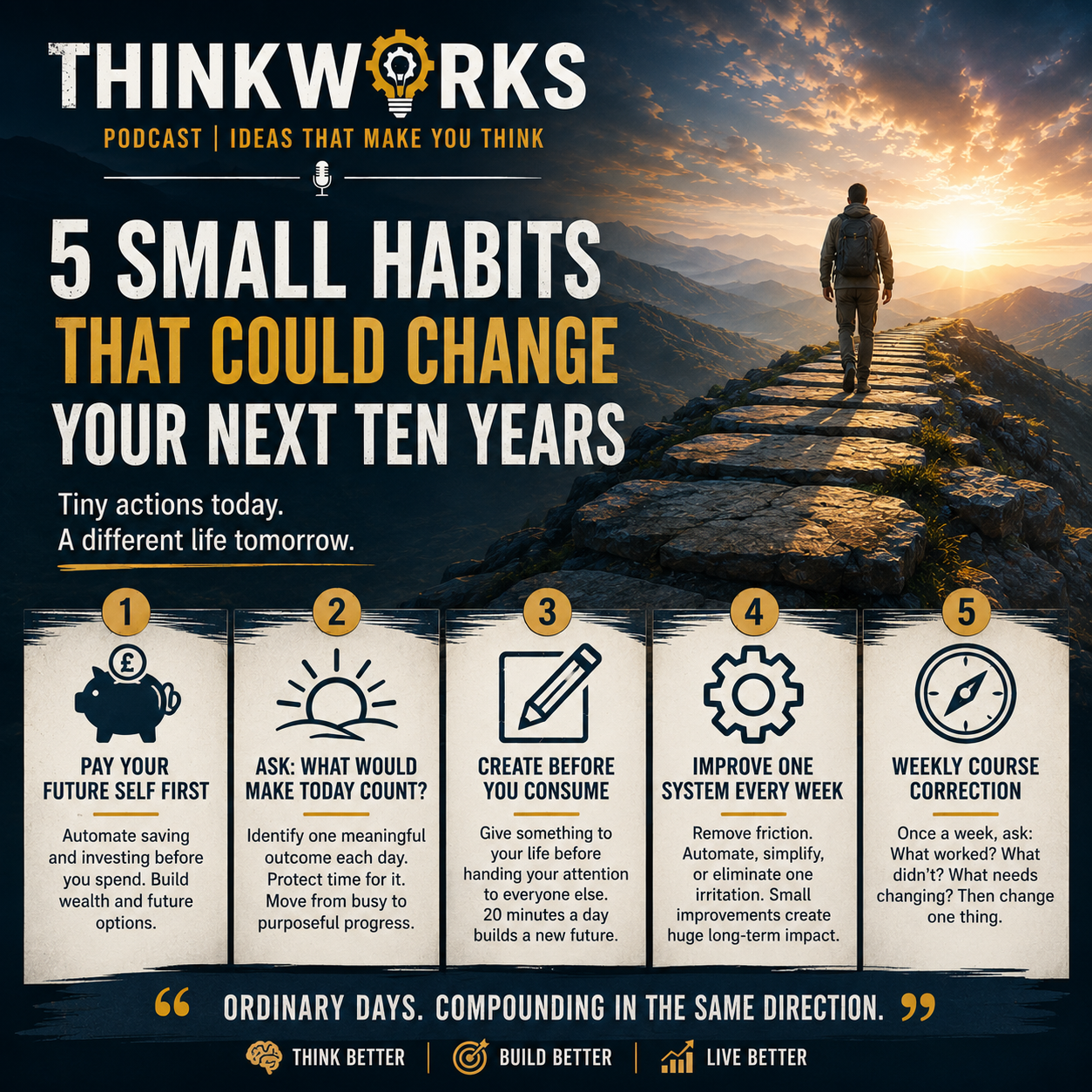
We're going to be discussing this in greater detail on next week's podcast episode but I thought it would also make an interesting blog piece, a kind of short introduction to the larger chapter later.
And the first point to make is: If we're genuinely talking about a ten-year horizon, resist dramatic habits! The winning habits are almost boringly small—because the real power comes from being able to keep doing them when life gets messy.
Here are the five I've chosen for myself.
Pay your future self first — automatically. Every time money arrives, have a predetermined percentage automatically moved into long-term savings/investments before discretionary spending begins. Even the amount matters less initially than establishing the mechanism. Every time income increases, increase the contribution before lifestyle expands. The compounding isn't only financial: after ten years you've built assets and the identity of somebody who routinely creates future options.
Ask one deliberate question every morning: “What would make today count?” Not what do I need to get done? That's the to-do list talking. Identify the one meaningful outcome that would make the day feel worthwhile, and protect some time for it. Ten years of merely responding to what's urgent produces a very different life from ten years of deliberately moving something important forward.
Create before you consume. Give something to your own life before handing your attention to everyone else. It might only be 20 minutes: write 200 words, develop an idea, exercise, work on a business, learn something, make something. Then email, news and social media can arrive. Twenty minutes sounds trivial. But 20 minutes × 300 days × 10 years is 1,000 hours spent building rather than consuming. That's books, skills, businesses and bodies quietly being created.
Make one tiny improvement to a system each week. Instead of repeatedly solving the same irritation, ask: “How could I make this easier next time?” Automate a payment. Create a template. Move something to where you actually use it. Establish a boundary. Cancel something useless. Fix one recurring friction point. That's only 52 improvements a year—but after a decade you've potentially redesigned 520 little pieces of your environment. This may be the most underrated form of compounding there is: eventually your life starts helping you rather than constantly requiring you to manage it.
Conduct a ten-minute weekly course correction. Once a week, ask three questions: What worked? What didn't? What needs changing? Then change one thing. This is the habit that protects all the others, because life will inevitably knock plans sideways. The objective isn't perfect consistency for ten years. It's noticing when you've drifted and correcting before ten bad days quietly become ten bad years.
And there's something underneath all five that I think matters more than the individual habits.
Don't compound intensity. Compound direction.
People dramatically overestimate what a heroic month can accomplish and underestimate what a fairly ordinary decade pointed consistently in the right direction can do.
Imagine two versions of someone starting today.
One waits for motivation, responds to whatever seems urgent, consumes before creating, repeatedly tolerates the same friction and thinks about the future occasionally.
The other saves a little automatically, advances one meaningful thing each day, creates something before consuming, improves one system every week and checks their direction every Sunday.
For the first few months, their lives might look almost identical.
After ten years, I suspect you'd struggle to believe they started in the same place.
And that gives us a rather nice You 2.0 principle:
A dramatically different life rarely requires dramatically different days. It requires ordinary days that compound in the same direction.
