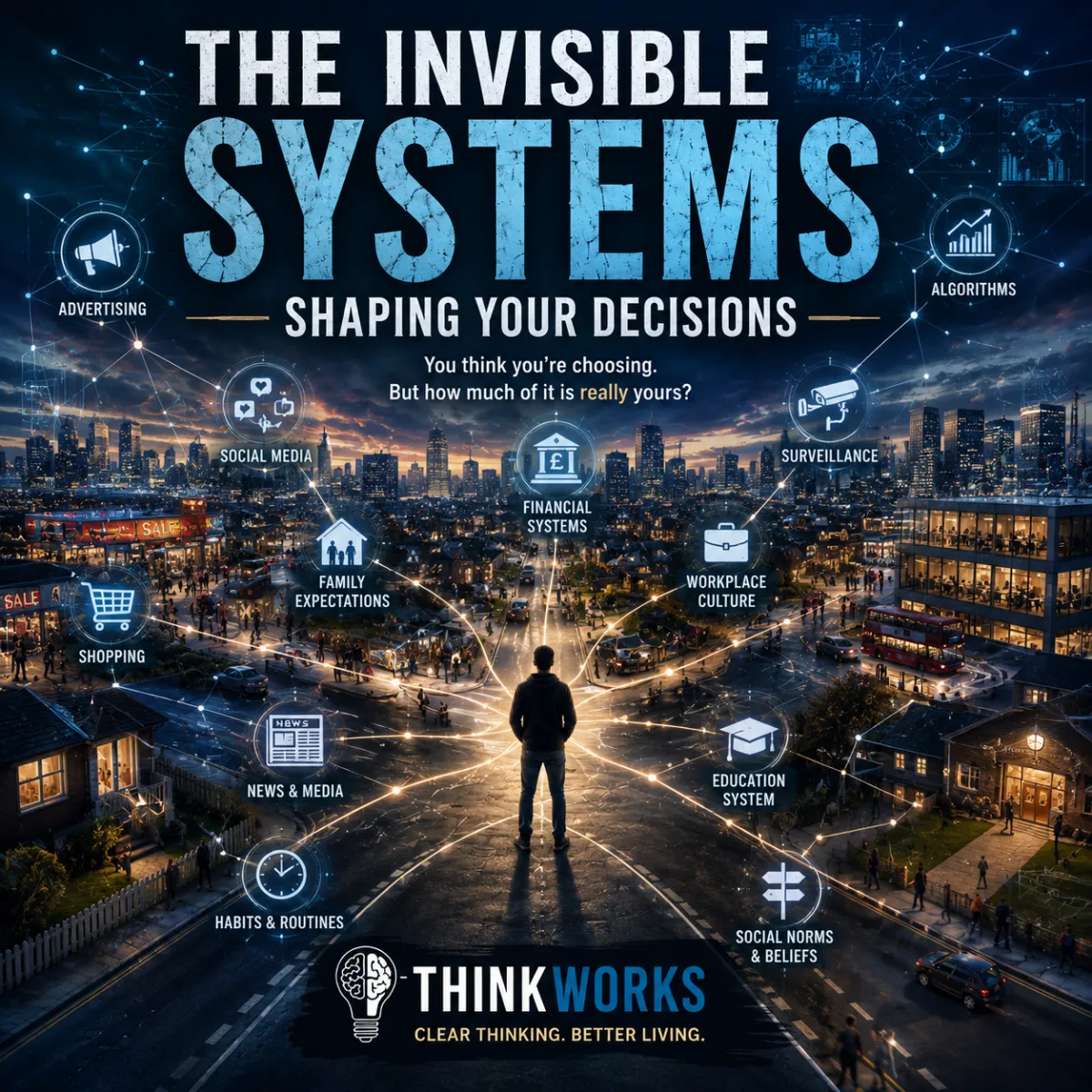
The Invisible Systems Shaping Your Decisions
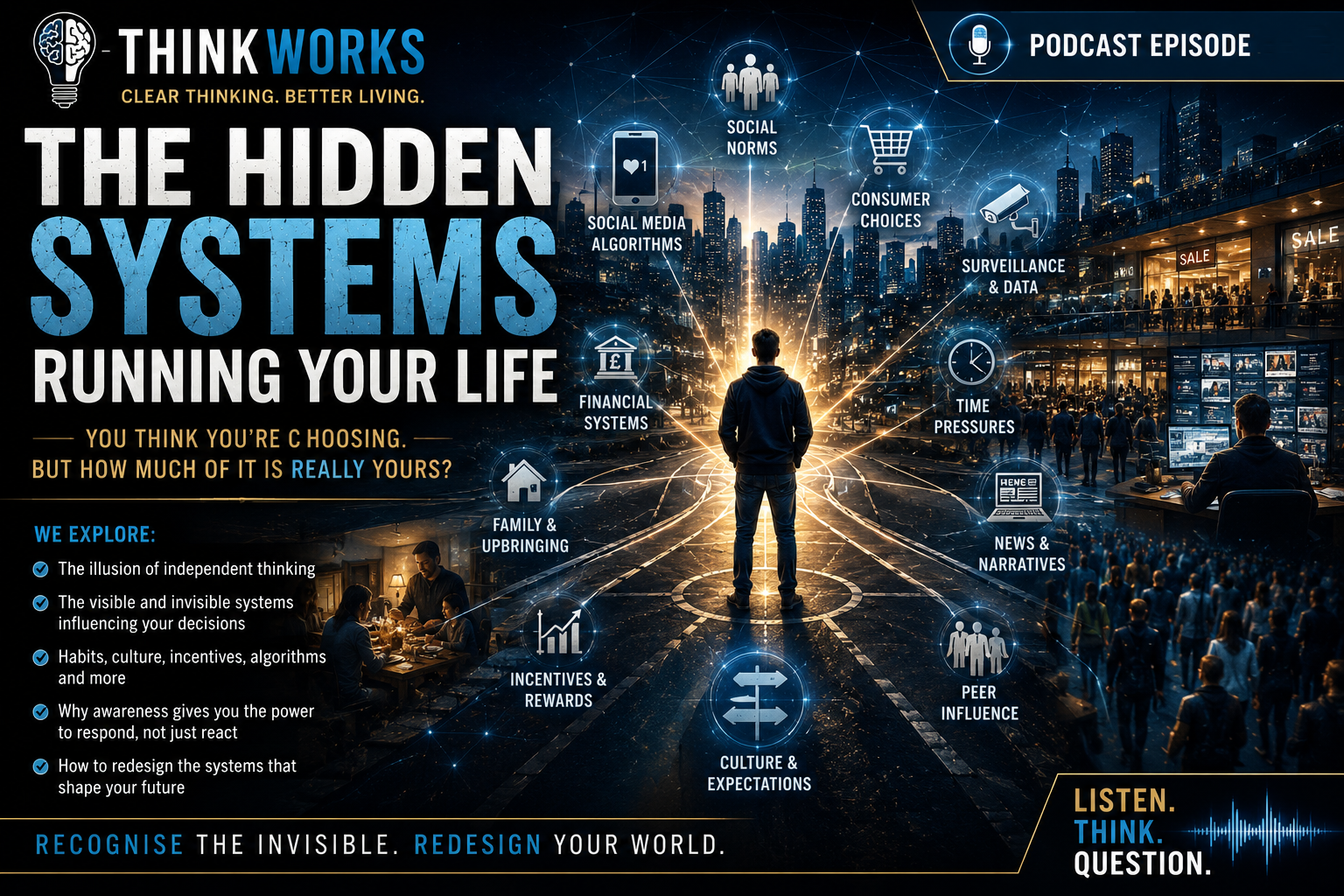
The Invisible Systems Shaping Your Decisions
We like to believe we make our own decisions.
We choose what to buy. We decide where to work. We vote, we eat, we scroll, we speak and we build our lives one conscious choice at a time.
Or at least, that's how it feels.
But what if many of the decisions we make every day have already been gently nudged in one direction long before we become aware of making them?
Not because anyone is controlling us.
But because we are all living inside systems.
Some systems are obvious. We drive on one side of the road. We pay taxes. We queue. We follow timetables and rules because they help society function.
Other systems are almost invisible.
The layout of a supermarket influences what ends up in our trolley. A notification on our phone interrupts our concentration. Social media algorithms quietly decide what ideas we see and which ones we never encounter. Family traditions shape our expectations. Workplace cultures influence how we speak, dress and even what we believe success should look like.
Most of the time, we don't notice these influences because they've become part of the background.
Like the air we breathe, they're easiest to ignore when they're working exactly as intended.
That doesn't mean they're sinister.
In fact, many invisible systems make life easier. Habits reduce mental effort. Good routines save time. Shared expectations help communities function. Even something as simple as putting your keys in the same place every evening is a small personal system designed to make tomorrow a little easier.
The question isn't whether systems exist.
It's whether we recognise them.
Because once we begin to see the systems around us, something interesting happens.
We stop asking, "Why am I like this?"
And we start asking, "What is encouraging me to think, behave or choose this way?"
That's a subtle shift—but an incredibly powerful one.
Instead of blaming ourselves every time something doesn't work, we become curious about the environment we're operating in. Instead of assuming that motivation is the answer, we begin looking at structure. Instead of believing every decision springs entirely from our own independent will, we acknowledge that context matters.
It doesn't remove responsibility.
It gives us better tools.
The most effective people rarely rely on willpower alone. They build systems that make good decisions easier and poor decisions harder. Likewise, the healthiest organisations don't simply ask people to work harder—they design processes that help good work happen consistently.
The same principle applies at every level of life.
Our homes are systems.
Our workplaces are systems.
Our relationships are systems.
Our communities are systems.
Even the stories we tell ourselves about who we are can become systems that quietly reinforce the same behaviours, day after day.
Once you begin looking through that lens, the world starts to make a little more sense.
Not because it becomes simpler.
But because the hidden patterns begin to reveal themselves.
And perhaps that's one of the most valuable skills any of us can develop in an increasingly complicated world: learning to recognise the invisible forces shaping our visible choices.
This Monday on ThinkWORKS
This week we're exploring one of the most important ideas behind both personal growth and critical thinking:
The Hidden Systems Running Your Life.
We'll look at why our choices aren't always as independent as they feel, how habits, environments, incentives and algorithms quietly influence us every day, and—most importantly—how recognising those systems gives us the opportunity to redesign them.
Because you can't change a system you can't see.
Join me this Monday on ThinkWORKS, where we'll explore the invisible architecture behind everyday life—and how understanding it can help you think more clearly, work more effectively and build a better future.
