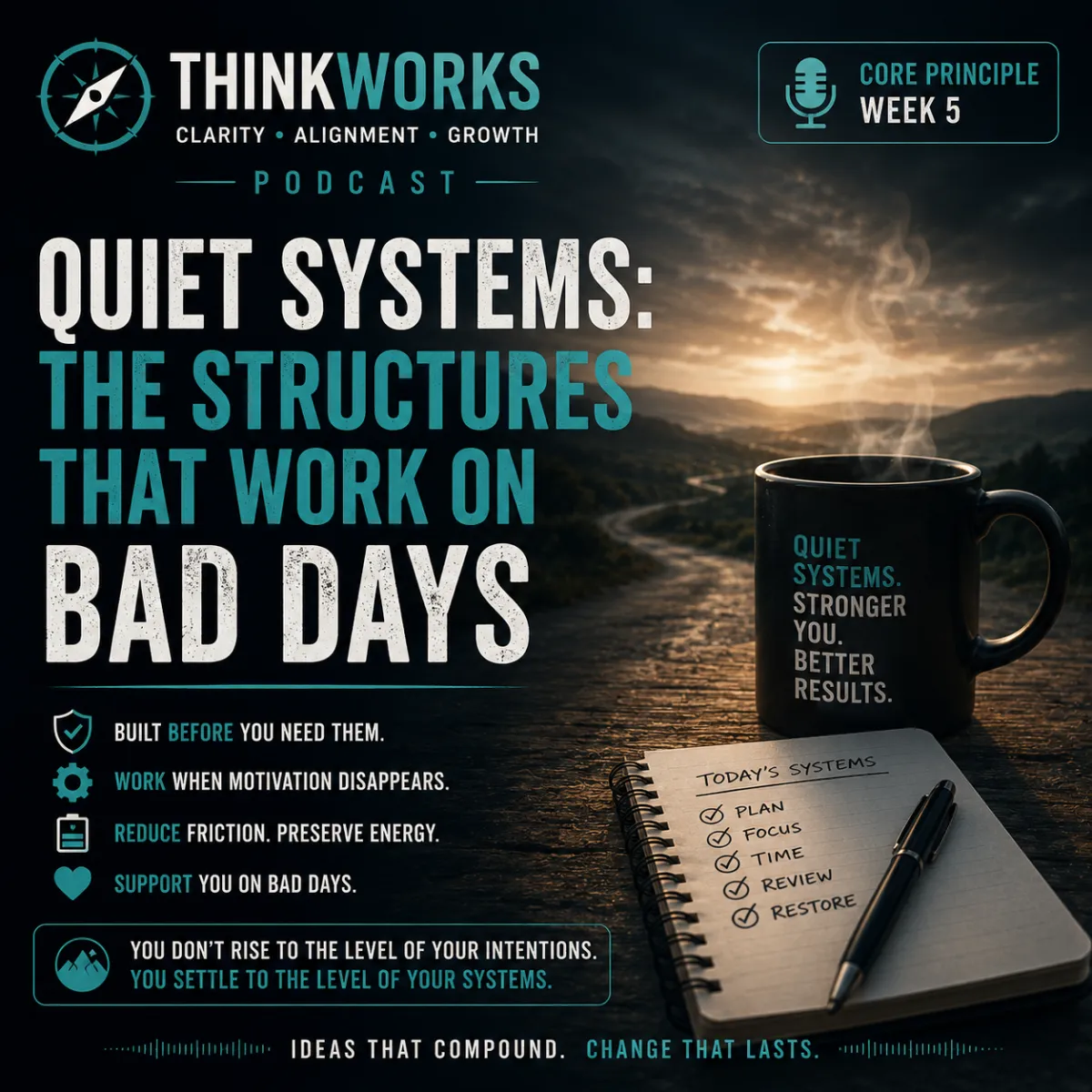
Quiet Systems: The Structures That Work on Bad Days
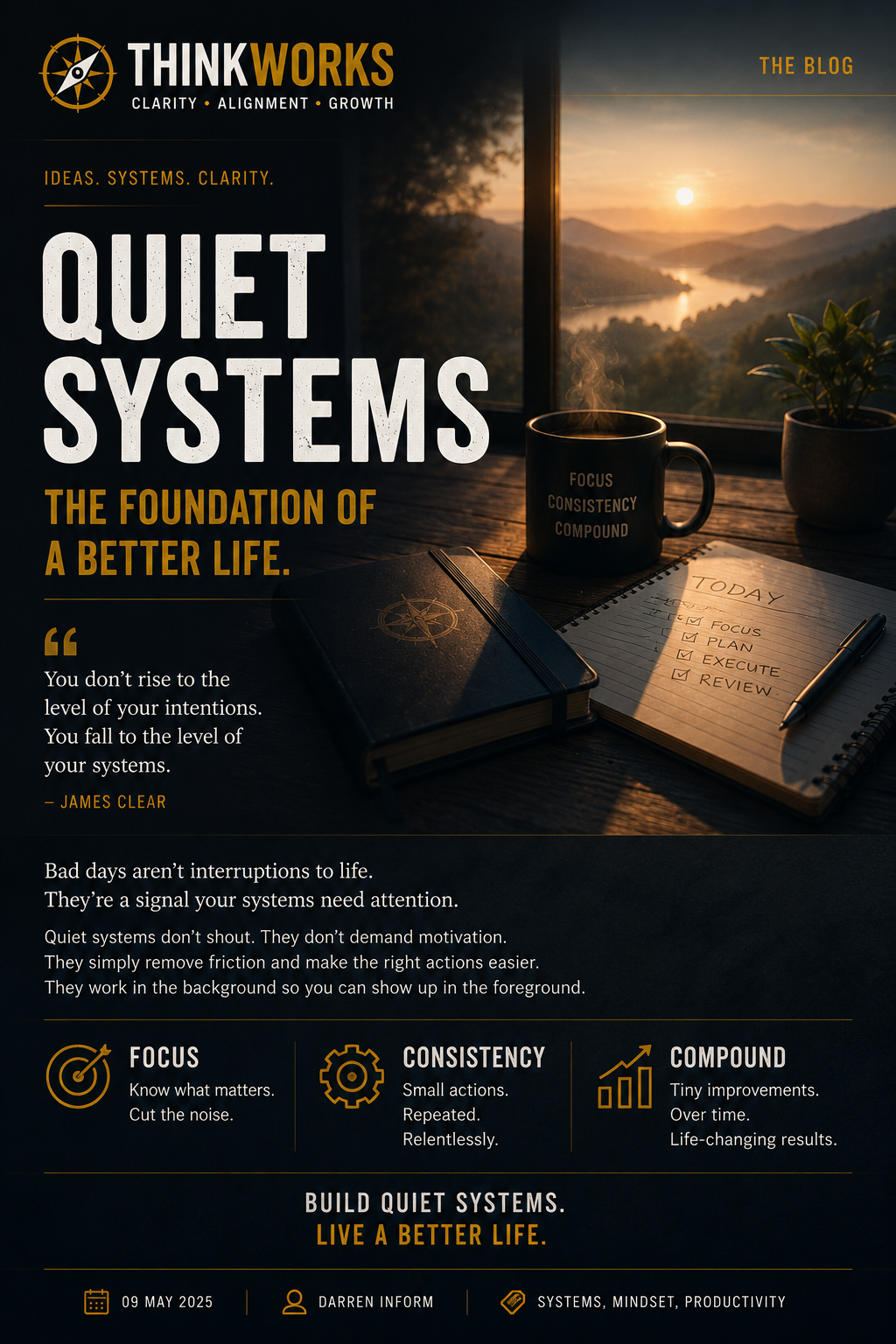
There’s a tendency in personal development—and business culture generally—to focus on dramatic change.
Big goals.
Big breakthroughs.
Big transformations.
But the longer I do this work, the more I’ve come to believe something else:
The systems that truly change your life are usually much quieter than that.
They don’t announce themselves.
They don’t feel revolutionary.
They just keep working.
Especially on bad days.
What Is a Quiet System?
A quiet system is a structure, routine, or process that quietly supports you over time without demanding constant motivation.
It reduces friction.
It preserves energy.
It helps you continue when you’re tired, distracted, overwhelmed, doubtful—or simply human.
And importantly, quiet systems rarely look impressive from the outside.
They’re often small things, such as:
keeping a consistent thinking space
writing things down instead of mentally carrying them
having a simple morning structure
blocking time before the day becomes reactive
reducing unnecessary decisions
creating repeatable processes for recurring tasks
None of these things are dramatic.
But over time, they become stabilising forces.
The Real Problem Isn’t Usually Knowledge
A conversation this week stuck with me.
Someone said:
“I know what I need to do… I’m just not doing it.”
That’s more common than people admit.
Because the problem is rarely knowledge.
Usually, it’s:
hesitation
doubt
exhaustion
friction
And friction matters more than people realise.
The harder something feels to continue consistently, the more likely we are to stop.
That’s why systems matter.
Not because systems are exciting…
but because they reduce the energy required to keep moving.
Rethinking Earlier Ideas
One of the interesting things about revisiting ideas years later is that you start seeing what was underneath them.
When I first explored ideas like:
identity
vision
momentum
alignment
…I saw them mostly through a psychological lens.
Now I also see them structurally.
For example:
A vision is not just inspiration.
It’s a filtering system.
Momentum is not just energy.
It’s reduced resistance.
Identity is not just self-belief.
It’s the repeated reinforcement of behaviour over time.
That’s what I mean by second-pass thinking.
You revisit ideas with more experience and realise the thing underneath the thing.
And increasingly, I think this is one of the most important truths:
Better systems produce better outcomes more reliably than better intentions.
The Systems That Save You
The systems that matter most are rarely the ones that make you look productive on your best day.
They’re the ones that still support you on your worst ones.
That’s the real test.
Not:
“Does this work when I’m motivated?”
But:
“Does this still help when life gets messy?”
Because bad days aren’t interruptions to life.
They are part of life.
And if your routines, goals, or strategies only work when conditions are perfect…
they’re probably not systems.
They’re moods.
A Simple Question
So here’s something worth reflecting on:
👉 What currently relies too heavily on motivation in your life?
And:
👉 What small quiet system could reduce the friction?
Not a complete reinvention.
Not an overhaul.
Just one structure that quietly supports you more consistently.
Because the systems that save you often don’t feel dramatic at all.
They just keep working.
Quietly.
Over time.
Exactly when you need them most.
If You Remember One Thing…
You do not rise to the level of your intentions.
You settle to the level of your systems.
So build quiet systems.
Not for the good days.
For the difficult ones.
