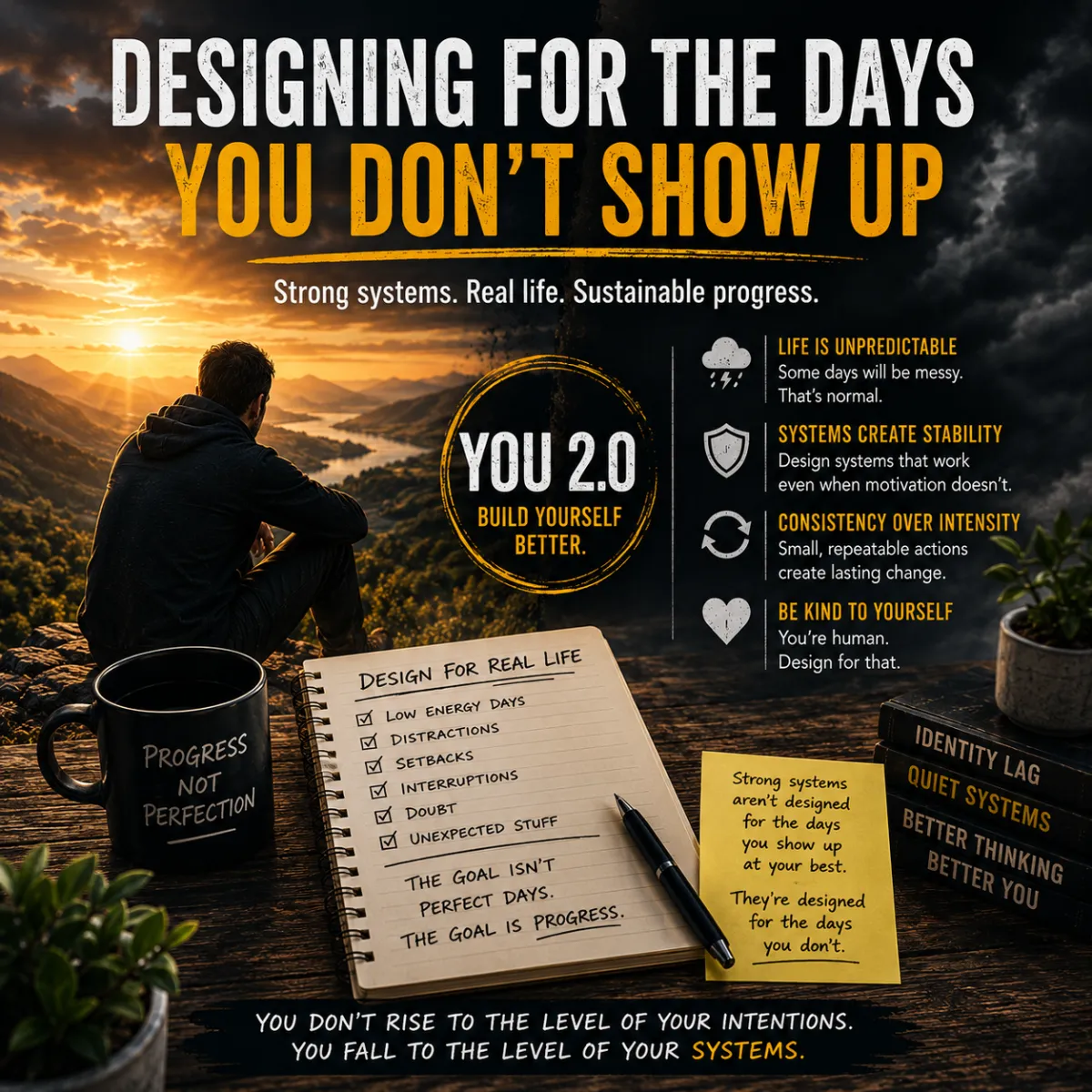
Designing for the Days You Don’t Show Up
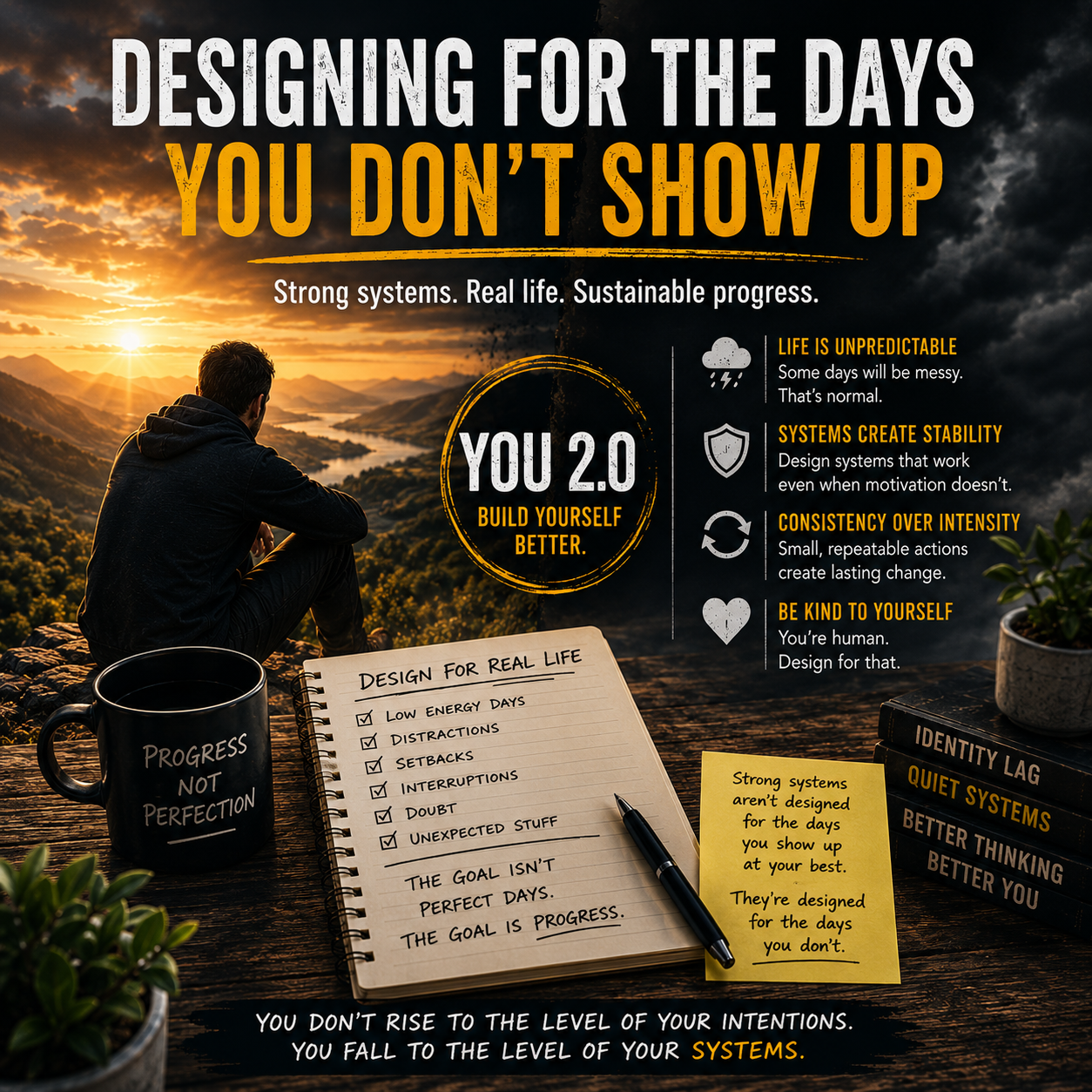
Designing for the Days You Don’t Show Up
Most people design their lives around a fantasy version of themselves.
The motivated version.
The disciplined version.
The version that wakes up every morning energised, focused, and ready to tackle whatever the day throws at them.
The problem?
That version of you exists far less often than you'd like to admit.
Most days are far more ordinary.
You're balancing work, family, responsibilities, distractions, interruptions, low energy, unexpected problems, and the thousand small demands that come with modern life. Yet many of us continue creating goals, habits, and plans as though we're always going to be operating at peak performance.
And then we wonder why everything falls apart.
Over the last few weeks on ThinkWORKS, I've explored two ideas that sit at the heart of personal growth: Identity Lag and Quiet Systems.
Identity Lag is what happens when your behaviour changes before your self-image catches up. You start writing, but you don't feel like a writer. You start exercising, but you don't feel fit. You start leading, but you don't feel like a leader.
Growth arrives before certainty.
Quiet Systems are the structures that keep working when motivation disappears. They don't rely on inspiration or confidence. They don't demand perfection. They simply create enough support that progress can continue even when life becomes messy.
The more I've reflected on these two ideas, the more I've realised they are really talking about the same thing.
They are both about what happens on the days you don't show up as your best self.
Because those days matter.
In fact, they matter more than most people realise.
A lot of personal development advice focuses on ideal conditions. It assumes you'll have the energy, focus, confidence, and motivation required to follow through on your plans. But real life doesn't work that way.
Some days you're tired.
Some days you're overwhelmed.
Some days you're questioning whether any of it is worth it.
And yet those are the days that determine whether your systems are genuinely useful or simply wishful thinking.
The strongest systems aren't designed for perfect days.
They're designed for difficult days.
They assume:
motivation will disappear
life will interrupt
setbacks will happen
energy will fluctuate
And instead of pretending those things don't exist, they build around them.
That's why I have become less interested in intensity and more interested in sustainability.
The world celebrates dramatic effort.
But real transformation is usually much quieter.
Books are written through repeated returns to the page.
Businesses are built through consistent action over time.
Relationships grow through small moments repeated again and again.
Most meaningful progress doesn't happen through heroic bursts of effort. It happens through accumulated repetition.
Quietly.
Almost invisibly.
The question is no longer:
"What can I achieve on my best day?"
The better question is:
"What can I still do on my average day?"
Because average days are where life happens.
And if your systems work there, they will carry you further than any burst of temporary motivation ever could.
This idea sits right at the heart of the philosophy behind You 2.0: Build Yourself Better.
The book was never really about becoming a perfect version of yourself.
It's about creating alignment between who you want to become and the systems you use every day.
Not through willpower alone.
Not through endless motivation.
But through small, repeatable actions that continue working when life becomes complicated.
Because in the end, lasting change rarely comes from becoming extraordinary.
It comes from designing a life that still works when you're being completely, wonderfully, imperfectly human.
And that's where real growth begins.
You 2.0: Build Yourself Better
If you've enjoyed these recent ThinkWORKS podcast and blog episodes on Identity Lag, Quiet Systems, and designing for the days you don't show up, you'll find these ideas explored in much greater depth throughout You 2.0.
Because becoming a better version of yourself isn't about perfection.
It's about building systems that help you keep moving forward, even when you don't feel like it.
