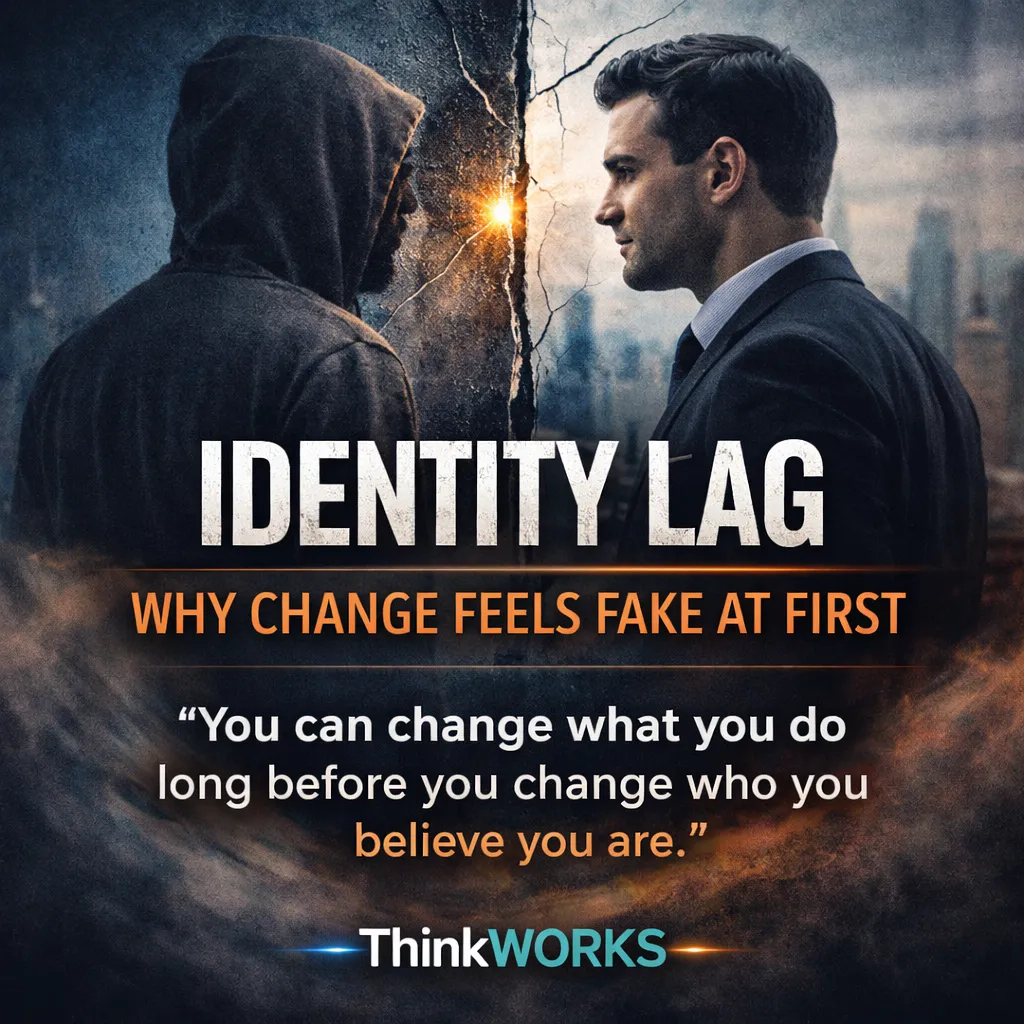
Identity Lag: Why Change Feels Fake at First
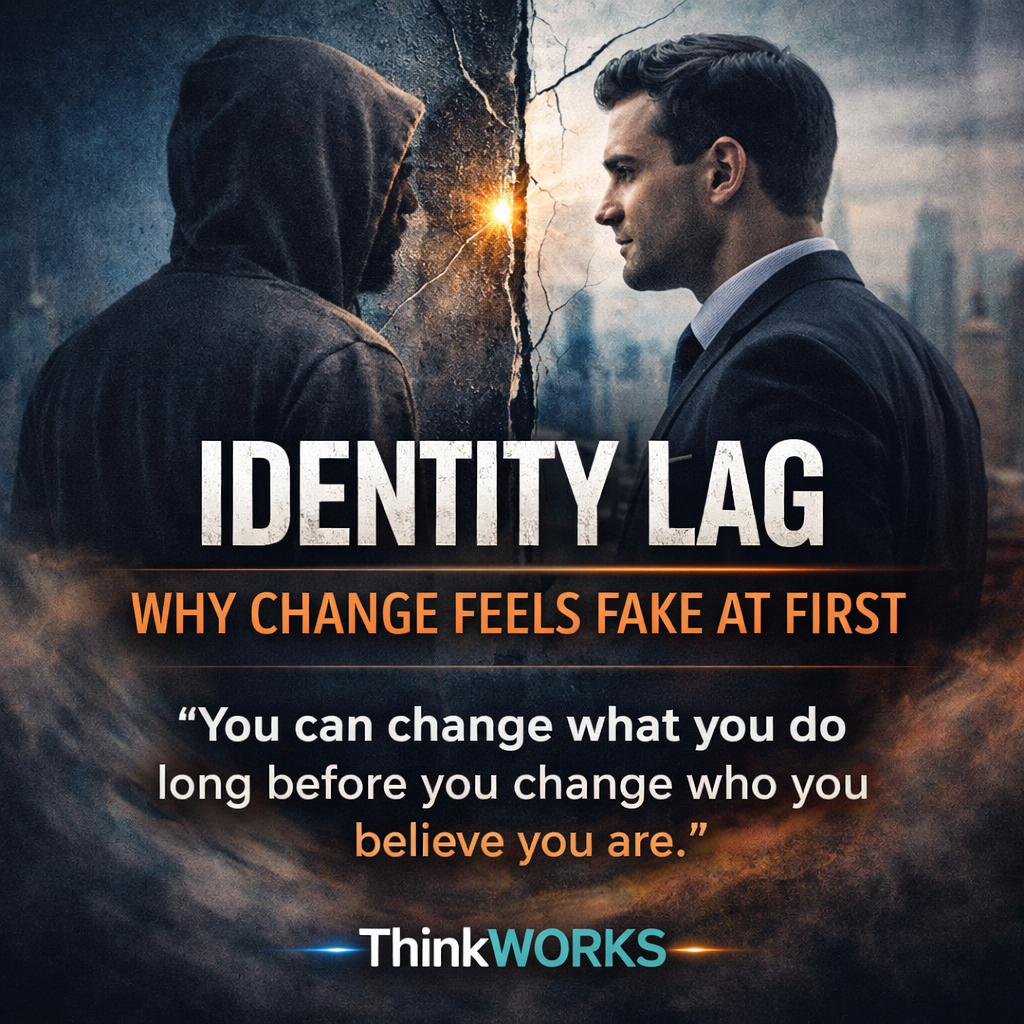
You’ve changed your behaviour… so why doesn’t it feel real?
You start showing up differently.
You make better decisions.
You take action where you used to hesitate.
You begin to act like the person you’ve been trying to become.
And yet…
It feels fake.
Forced.
Unnatural.
Like you’re pretending to be someone you’re not.
If you’ve ever felt that, you’re not alone.
More importantly…
You’re not doing anything wrong.
The Problem No One Talks About
Most advice about change focuses on behaviour.
Set goals.
Build habits.
Take action.
And that’s all useful.
But there’s a gap that rarely gets explained:
You can change what you do long before you change who you believe you are.
That gap is where the discomfort lives.
It’s also where most people quit.
Not because they’re failing…
…but because it doesn’t feel real yet.
Introducing: Identity Lag
Let’s give this experience a name.
Identity Lag.
Your behaviour can change quickly.
Your identity cannot.
Identity is built over time through:
repetition
evidence
and the stories you tell yourself about who you are
So when your actions change faster than your self-image…
you feel out of sync.
The Mirror Lag Metaphor
Imagine stepping forward…
…but your reflection stays where it was.
You’ve moved.
But the mirror hasn’t caught up yet.
So when you look at yourself, you don’t see the new version.
You see the old one.
That’s what Identity Lag feels like.
You’re not seeing who you’re becoming.
You’re seeing an outdated reflection.
Rethinking “Imposter Syndrome”
We often label this feeling as imposter syndrome.
As if it’s something to fix.
Something to eliminate.
But what if that’s the wrong way to look at it?
What if imposter syndrome isn’t a sign you don’t belong…
…but a sign you’ve moved forward before your identity has caught up?
Not failure.
Not fraud.
Just timing.
Why It Feels So Uncomfortable
Your brain prefers consistency.
It wants your actions and your identity to align.
So when they don’t, it creates tension:
doubt
resistance
that feeling of “this isn’t really me”
Most people interpret that tension as a warning.
But in reality…
it’s a transition.
How Identity Actually Changes
Identity doesn’t change because you decide it should.
It changes through evidence.
Every time you act differently, you cast a vote for a new version of yourself.
But one action isn’t enough.
Neither are ten.
It takes consistent repetition before your brain updates its model of who you are.
Belief follows behaviour — not the other way around.
The Shift That Changes Everything
Instead of asking:
“Why does this feel fake?”
Ask:
“How long have I been acting like this new version of me?”
If the answer is:
a few days
a couple of weeks
even a few months
Then the discomfort makes sense.
You’re early.
You’re Not Faking It
You’re rehearsing it.
Every identity starts as something that feels unfamiliar.
Something you have to step into deliberately.
Before it becomes natural.
Before it becomes automatic.
Before it becomes you.
A Simple Challenge
For the next 24 hours:
Act like the person you’re becoming.
Fully.
Decisively.
Without apology.
And instead of judging how it feels…
just notice it.
Because the version of you that feels fake right now…
might not be false at all.
Final Thought
It might just be early.
🔗 ThinkWORKS Reflection
Where in your life are you already ahead of your own self-image?
